Showing posts with label Let's Look At. Show all posts

Monday, December 19, 2016

Let's Look At:


Motion Capture Article Review

Acting or Animation?


avatar_sagar


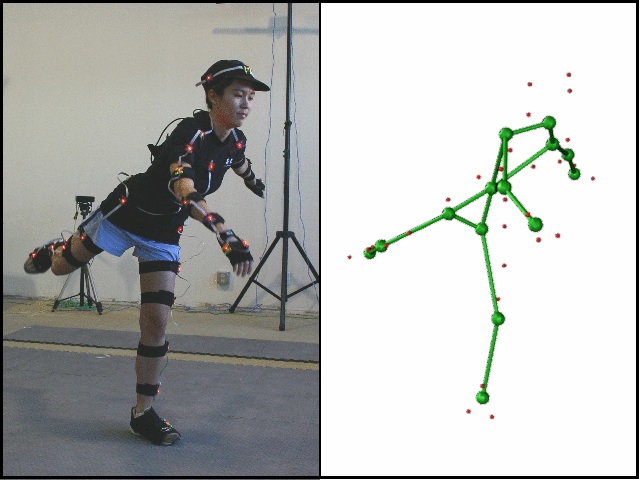
As I was browsing the articles on Animation Arena, I came across a topic that caught my eye: motion capture. More and more movies nowadays are using motion capture to help animate digital characters. From the blue aliens in Avatar to Smaug in The Hobbit, an increased number of characters are made to move to the faces and bodies of the actors that voice them. One side effect of this, however, seems to be the question on whether the main work in on that of the actor or the animator.


Image result for motion capture
The article didn't give a definite answer to this, due to the general lack of one, but it seems that it cannot be defined as either. Without the actor, the character doesn't have the same nuanced performance. Without the animator, the movie would be limited to the special effects incorporated into live action. Motion capture is likely in pinnacle of the symbiosis of acting and animation that exists today.

Beyond it's intense monetary and time-saving benefits, I feel that Motion capture as a medium will only grow in use as the computers we use only increase in computing speed and power to handle what it can offer.

What do you think?

Sunday, December 18, 2016

Let's Look At:


Collegiate Animation


What School Is Right for Me Or You?


Today's blog is going to focus on a subject that is becoming more and more relevant to myself and many of my classmates as our final year of high school comes to a close: college choice. I have found one article on Animation Arena that helps address this topic.


Image result for university of central florida


There are so many colleges in this country that the task of finding the one that best fits you can be a daunting task. For those looking into careers in animation, there are key components that make the search a little quicker. As the linked article claims, there are four main things that students can look for in a school:

1. Does the program teach all aspects of animation? 


Whether it's a specialty art school or a program within a state school, the author of the article, Annie Gray, stresses the importance of having a generalized idea of the entire process of animation. From basic drawing skills to art history, she strongly advocates for all animation students to learn these skills and all others. What's more, she finds it common for most animation programs to not even teach animation the first year, not for gen-eds, but for classes like perspective and figure drawing.

Now, while these are good and notable points, I personally contest the need for all animators to be able to draw with exceptional skill to get into the industry. This is mostly accredited to the vast increase in computer animation. Learning all the animation principles? I find that valuable. Needing to become an expert on figure drawing? Maybe not. In my case, I'd rather have more animation and less "art history". 

2. How much experience do the professors have?


On this pint Annie Gray explains that truly good professors have not just the technical skills but the industry experience and connections that give their students a head start in the reality of the field. On this I agree strongly that it's a sure benefit to any student to have such a professor.

3. Where is it located?


Not all fields are location-sensitive, but animation definitely is. The author explains in this section that finding a school closer to the major studios (namely, in sunny, expensive, California) greatly increases your chances of getting hired as "there is a great chance that those animation studios recruit their talent from those local schools." This is not to say that to be an aspiring animator you must go to a California school. There are several good schools, as the author also explains, in Chicago or Florida that can teach just as well, but may need slightly more work on the connections end of things.

4. Is there a good alumni network?


This aspect of schools may be often overlooked, but can be invaluable to an aspiring animator. Gray writes that may college graduates in animation report finding jobs through their professors or classmates, so being able to have reliable contacts from old students who've made it into the industry.


These are four, but certainly not all the things a student should look into when selecting a school for animation. Personally, some that I use as indicators are range of majors (in case you change your mind), and student-teacher ratio (which can be good or bad depending on the class or student).

Thursday, May 19, 2016

Year's End Reflection

It's Been A Good Year

Let's Look Back


Junior year is notorious for being one of struggle and strife, but it can also be one of learning and exploration. From Petri to Ampich-Anne, I have had many chances to look into and develop many new, more complex skills than I had the chance to last year whilst focusing on design and animation. From the trials and tribulations of this bird to the new realm of stop-motion I have been able to learn many things about modeling, project planning, scope, team management, rigging, and much more.


From the very start of this year we had something to do. One project I did not post directly about was a fish. (from the concept art on the left) The goal of this project was to teach us all better modeling techniques, weight painting, and some ways to animate something. It was the springboard for all the modeling and rigging know-how I was to learn throughout the rest of the year. Only now do I truly understand how vital it was that we did this particular project at the beginning of the year.

Looking back upon this fish, I can directly see how it links to what I have been able to accomplish this year. Having to draft the fish initially taught me the advantages and necessity of having an image to go off of. I have repeated this technique with both Petri and Ampich-Anne, as seen in their respective posts Here and Here. Next, we learned vital modeling skills which I have taken to heart with every other 3D project since. We learned a little about UV texturing (probably the least developed skill of mine) and a lot about rigging (Which was then reiterated for me with, yet again, Petri). Each of these skills was learned more though trial and error than direct instruction. Nothing teaches you to plan ahead like having to redo the same steps ten times over due to a lack of forethought. Technically, I feel far more confident in modeling ad rigging than I did before. I feel familiar enough with Maya now as so that I can envision exactly how I intend to pul life out each and every pre-generated shape. (Maybe next year I should practice straying from those...)


A dramatic scene from this year's group project


Beyond those technical skills, this year has given me more vital practice in working with others. All but the stop motion project this year were my solitary ideas and solitary efforts. For me, working with those of differing skills and mindsets is a whole other ballpark of difficulty. Not to say I am introverted to the point where it hides my working: I'm not. Rather, I walk a fine line between wanting everything to go my way and wanting to sit back and watch things unfold. I generally lean towards the fist kind, however, when I have not worked with all the people involved before (and even then my trust only goes so far until I have seen them preform). I feel that this project was the most successful diplomatically for me, as I followed the mantra "If you think you can do it better than the person, you are assigning them to the wrong job". After the cooperative creative process, I was semi-burdened with the task of assigning jobs to people. Many were first picks for certain tasks like set building and model moving, but I often found it difficult to entrust some of the smaller things to others, even if it meant a mountain of extra work for myself. This is something I surely need to work on.


This industry is an industry of people, and it is nearly impossible to go into it without expecting to have to compromise and work with new people along the way. I must find and embrace my strength soon, so I can refine it and combine it with the strengths of others to make a truly skillful work. Last year was a jack of all trades, but really skillful at nothing in particular beyond concept art. That is still something I feel I excel at more than most, and I want to use the skills I have and will gain to be able to both create concepts that can be feasibly executed in these programs and to be able to execute them myself in the way I envision them.


Looking back at all I have done, I don't think I would honestly change anything. Every project messed up, every minute wasted, showed me countless ways that I could improve myself and my project workflow. I was not as productive as I could have been mid-year, but I learned from that, in hindsight, how I could manage my time better. If I had to change something, it would be watching more tutorials before diving into something new. Maybe, if I did that, I wouldn't have to redo as much.

All thing considered, I feel this has been my most beneficial year in e-Communication to date. I have had the rare chance to explore a field that I am interested in pursuing as a career this early in my life. To me, it's best to dip your foot into the ocean of possible careers as soon as possible, as to minimize time wasted pursuing something that you turn out to hate. Maybe that causes me to put too much pressure on my early decisions, but I suppose we'll see how that directs me in the future.

I hope to keep up my posts a little more this summer, but in the meantime, this will be my school-end farewell!


Friday, March 11, 2016

Let's Look At:

Drawing Practice

Animation-Centered Exercices


Yesterday I was browsing some articles on Animationarena.com, and I came across something I felt the need to share with you all!

Click on the image to visit the article


In Annie Gray's Article, she covered a multitude of exercises that will train the artist to draw with animation, emotion, and dynamics in mind. Gray emphasizes the importance of seeing the details that you don't see normally. Animators need to be able to draw the small details of objects that the human mind disregards in favor of pattern and shape recognition. For example: the human face is a very detailed, complex object. It has wrinkles, creases, flyaway hairs, eyelashes, and all sorts of traits. However, people don't need all this information to understand what they see is a face.

:)

See, you can register that as a smiling face, can't you? It doesn't have eyelashes, a chin, or even a nose. But our mind knows it to be a face anyway. It's this same effect that gray defines as an issue. if you don't take the time to notice all the details, you won't be able to draw them.

I highly recommend taking a look at this article and trying out its exercises if this is a field you want to go in.

But back to my review!

I've seen some of the exercises they recommend before, and tried out one of them myself today: cafe drawing. Sitting in a classroom I observed my fellow classmates as they tested, and picked out certain people to quickly sketch before they shifted poses. Here are some of the sketches:


It was a lot harder than I expected to get a sketch down before the person moved (And to not look like I'm staring)

But just from doing that much I realized the benefits to doing as the article suggests. If you don't practice these skills of detail and movement-oriented art, you won't get good at them.

Gray clearly has a lot of experience refining and developing these kinds of skills, and the article is very well written (even if it is challenging to follow the exercises). I'm sure that I will be using these in the future, will you?

Friday, September 4, 2015

Let's Take A Look

Big Buck Bunny:

Professional Project Review


Today I'm going to talk about something I didn't make: a wonderfully made short film by the folks who developed the software Blender. Big Buck Bunny (2008) was made to showcase the capacity their free product could create with.

Big Buck Bunny tells the story of a large, gentle bunny that is endlessly tormented by squirrels. One day he decides to rebel and strike back against the squirrels with crafty traps. The short film is well put together, with a 3D modeled environment and characters that are accented with the excellent lighting. While most of the camera shots are close, the people at Blender still manage to establish a deceptively calm, pretty meow setting to contrast the actions of the squirrels. The short film sets up many similar contrasts such as:

-The bunny is oddly large and relatively masculine, but still acts dainty at the beginning
-The squirrels appear small and cute at the beginning, but slowly are revealed to be menaces
-The setting is serene and there are beautiful butterflies, but they are crushed by squirrels

If I were to take something away from this piece to apply to my own work, it would be creative use of camera angles and lighting. Since there is no dialogue, they communicated the story through gestures, faces, and angles. I am quite a ways away from that level of camera angle usage. One thing I saw that I can do, however, is the lighting. While I by no means can accomplish the lighting they have, I can identify possible ways they accomplished theirs. 

The only thing I could bring myself to critique is the grass texture, which at times seemed off, but even that wasn't detrimental to the film as a whole.

If I were given the task of improving it, I would probably look into developing the squirrels motives a teeny bit, but that'd be it. 

All in all, This short film is a funny, well-timed work that is definitely worth giving a watch if you like humorous story lines and comedic characters.